
Reviving True Omakase Inside Barcelona’s Luxury Boutique Hotels
The Japanese word Omakase* (お任せ) translates roughly to “I leave it up to you.” For decades, sitting at an omakase counter was an act of radical surrender — an intimate, unscripted contract between diner and chef, built on trust and the whims of the morning’s fish market.
That original spirit still gets invoked on every reservation page and menu description today. But walk into a top-tier omakase restaurant now, and the experience looks almost nothing like its ancestor. As Japanese fine dining has spread globally, omakase has evolved from a fluid, blind leap of faith into a highly structured, ticketed culinary performance. The core values of seasonality and craftsmanship remain — but the way they’re delivered has changed completely.
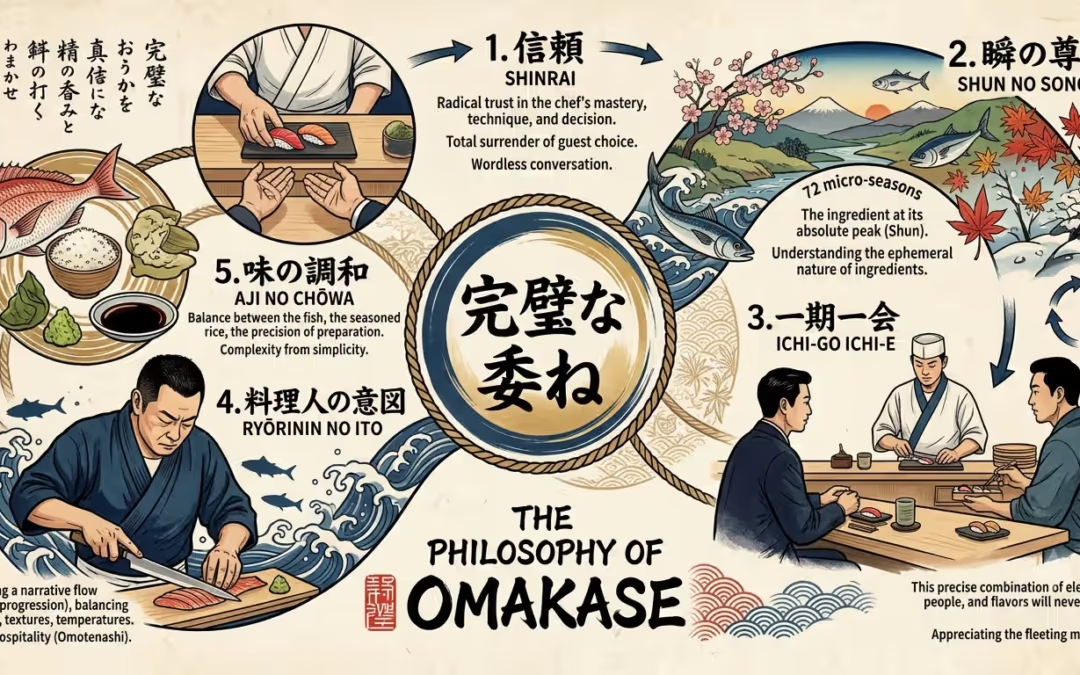
1. Three ideas anchored the classical omakase experience.
Trust in the chef
In a traditional setting, there was no printed menu, no course count, no fixed price. Saying “omakase” handed total control to the chef, who read the diner’s reactions — pace, appetite, mood — and adjusted the next piece accordingly. The meal unfolded as a kind of wordless conversation rather than a fixed script.
The shun — Radical seasonality
Japan’s traditional calendar divides the year into 72 micro-seasons of roughly five days each, a system with roots in ancient China that was adapted in Japan and used for centuries by farmers, fishers, and cooks to track nature’s smallest shifts. A chef working in that tradition cooked with whatever was at its absolute peak at the market that morning. If a particular fish wasn’t right that day, it simply didn’t appear — the menu was inherently unstable because nature was.
Ichi-go ichi-e — one time, one meeting
Rooted in the tea ceremony tradition associated with the 16th-century master Sen no Rikyū, this idea holds that a given gathering — this group of people, this room, this catch — can never be exactly repeated. It’s an appreciation of the meal as a fleeting, once-only event rather than a reproducible product.
2. The Modern Shift: Predictability as the New Luxury
Today’s high-end omakase experience runs on a different logic — one built for consistency, scale, and a global clientele rather than daily improvisation.
Guests are now frequently handed a printed menu that specifies exactly what they’ll eat, often locked to a strict 12-, 15-, or 20-course count decided well before the seating.
Where traditional Omakase ended in a handwritten bill reflecting whatever was actually eaten, modern reservations function more like concert tickets: a flat, premium fee — commonly $150 to $450 or more per seat — paid weeks in advance just to hold a spot, often through platforms like Tock, OpenTable, Resy.
Traditional chefs worked off the local morning catch. Modern kitchens increasingly plan around a global supply chain, flying in ingredients such as Hokkaido uni, Miyazaki wagyu, or Italian truffles days ahead. Because that sourcing has to be booked in advance and waste has real cost, chefs need a largely uniform menu for the entire evening’s seatings, not a different one for each diner.
3. Has the Philosophy Survived!
Purists have a real argument: a pre-printed, fixed-price, 15-course menu is a rehearsed performance, not the spontaneous art form Omakase once described. Some of that critique is fair — the element of genuine surprise, the daily gamble on the catch, is largely gone from the top of the market.
But it’s more accurate to say the philosophy relocated than that it disappeared. The trust a diner places in the chef hasn’t vanished — it has shifted target. It used to be trust in *what* would arrive at the counter, moment to moment. Now it’s trust in *how* that plate was built: the sourcing decisions made days in advance, the technique behind each cut, the consistency across twenty nightly courses that all have to land at the same standard. Seasonality hasn’t disappeared either — it’s just planned a week out instead of decided that morning.
Modern Omakase has traded some of its old-world unpredictability for reliability and scale. It’s no longer a wild gamble on the daily catch. But as a discipline, it still asks the same underlying question it always has: can a chef make a stranger feel taken care of, one course at a time?
4. Bringing the Soul Back: Omakase in Barcelona’s Boutique Hotels
In Barcelona, I bet the answer is yes — even inside a hotel, that’s me — A Japanese Culinary Artist, Omakase Creator & Japanese Gastronomy Consultant Consultant
The luxury hotel is arguably the hardest place to keep Omakase’s soul intact. Hotel dining runs on the logistics that define the modern era: fixed pricing, advance bookings, sourcing planned days ahead, guests with wildly different expectations arriving nightly. It’s precisely the environment critics point to when they argue omakase has become theater rather than craft.
I am not here to propose a return to the old counter wholesale — no printed bill, no course count, total blind trust. That version of Omakase doesn’t survive contact with hotel operations, and also I am not pretending otherwise. What I am after is narrower: keep the soul of the format inside a structure luxury hospitality actually requires.
The guest still knows the shape of the meal in advance — the number of courses is set, priced, and confirmed at booking, the same as any modern Omakase reservation. What isn’t set is the menu itself. There’s no printed list of dishes, no items decided weeks ahead to satisfy a supply chain. Each course is composed with a daily fresh catch and presented live — the way a traditional chef would read a guest and respond in the moment.
Allergies and intolerances are handled on the spot, at the counter, with an alternative composed for that guest in that moment — not a pre-standardized substitute plate prepped hours earlier to cover every dietary scenario in advance.
For the luxury tourist, it means the Omakase counter has to match the standard set by the rest of the property — the same discretion, precision, and polish they’d expect from the spa or the suite — plus something the hotel brochure can’t manufacture: a genuine, once-only experience worth the price of the seat, not a version of the same tasting menu they could find in any city with a five-star hotel.
For the local, “ultra expectation” is technical, not sentimental — correct knife work, real seasonality, sourcing that holds up to scrutiny. Locals know the difference between a chef and a performance staged for visitors, and they’re the harder room to win over precisely because a hotel address doesn’t earn any credibility with them on its own.
Designing Omakase that satisfies both at once is, in effect, a bet that my original thesis is correct — that the philosophy of Omakase never left, it just needs someone willing to rebuild it inside the constraints of modern luxury hospitality, rather than in spite of them.